
Damaged walls can make any room look unfinished and poorly maintained. Learning how to repair drywall correctly helps improve the appearance of your home while preventing cracks, holes, and texture problems from getting worse over time. Whether the damage comes from furniture, water leaks, or accidental impacts, proper repair techniques create smoother and cleaner walls.
Common Causes of Drywall Damage
Drywall damage can happen for many different reasons inside a home. However, some problems appear more often than others. Understanding the cause of the damage helps you choose the correct repair method.
Small Holes and Dents
Small dents and nail holes are common in bedrooms, hallways, and living rooms. These imperfections usually happen after hanging decorations or moving furniture. Fortunately, these repairs are simple when handled with the right patching materials.
Water Damage Problems
Leaks from plumbing or roofing systems can weaken drywall surfaces quickly. In many cases, water damage creates stains, bubbling paint, and soft wall sections. Therefore, damaged drywall should be repaired before mold or structural problems appear.
Cracks Around Corners and Ceilings
Temperature changes and home settling may create drywall cracks near ceilings, doors, and corners. Although some cracks are cosmetic, larger cracks can continue spreading if ignored for too long.
Tools Needed for Drywall Repair
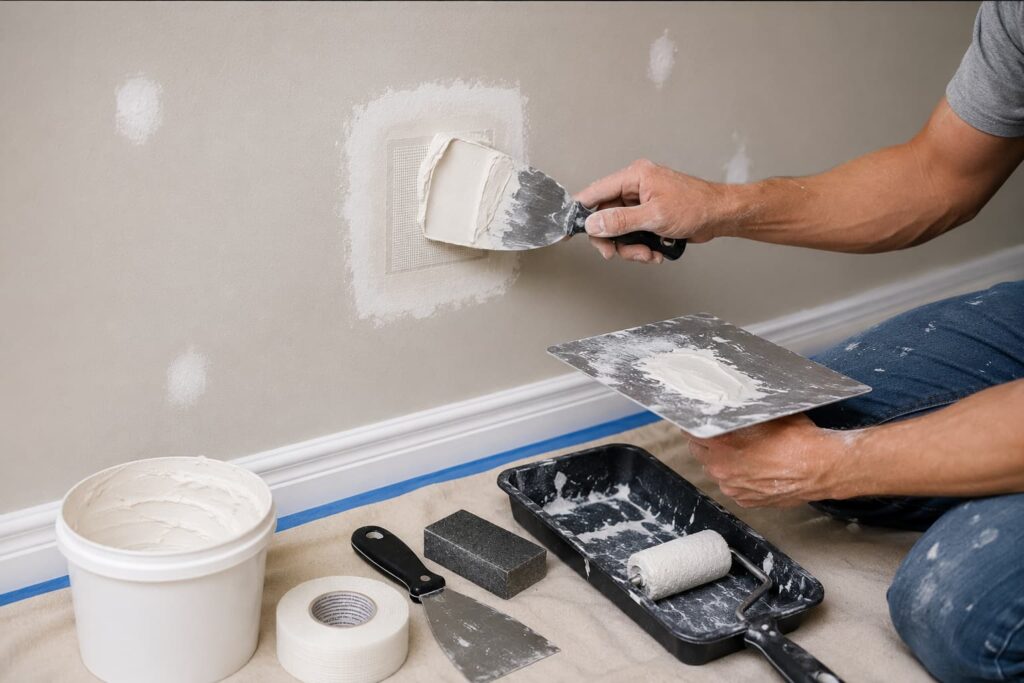
Before starting a drywall repair project, gather the proper tools and materials. Having everything prepared makes the process easier and produces cleaner results.
You may need:
- Joint compound
- Putty knife
- Sanding sponge
- Drywall patch
- Utility knife
- Drywall tape
- Primer and paint
- Texture spray for matching finishes
Professional repairs often look smoother because experienced contractors use proper finishing techniques and texture blending methods.
How to Repair Drywall Step by Step
Repairing drywall correctly requires patience and attention to detail. Following the proper process helps create a seamless finish that blends naturally with the surrounding wall.
1. Clean the Damaged Area
First, remove loose debris, broken drywall pieces, and dust around the damaged section. Clean surfaces allow the patching materials to bond more effectively.
2. Apply the Drywall Patch
Next, place a drywall patch over the damaged area. Small holes may only require mesh tape and joint compound. Larger holes usually need a stronger drywall patch for support.
3. Spread Joint Compound Smoothly
Apply joint compound evenly using a putty knife. Then, feather the edges carefully to help the repair blend with the existing wall surface. Smooth application reduces visible repair marks later.
4. Sand the Surface Carefully
After the compound dries completely, sand the repaired section gently. Proper sanding creates a smooth surface ready for paint and texture matching.
5. Match the Existing Texture
Texture matching is one of the most important steps in professional drywall repair. Different homes may have orange peel, knockdown, smooth, or hand texture finishes. Therefore, matching the texture correctly helps the repair become less noticeable.
6. Prime and Paint the Wall
Finally, apply primer before painting the repaired area. Primer improves paint adhesion and helps the final finish look more even and professional.
Why Professional Drywall Repair Matters
Although some homeowners attempt repairs themselves, professional drywall services often produce cleaner and longer-lasting results. Experienced drywall specialists understand how to repair drywall while matching textures, protecting nearby surfaces, and preventing visible patch lines.
Professional repairs also help maintain the value and appearance of your property. In addition, high-quality finishing creates smoother walls that look consistent throughout the home.
Signs You Should Call a Drywall Contractor
Some drywall problems require professional attention immediately. You should contact a contractor if you notice:
- Large wall holes
- Ceiling sagging
- Water-damaged drywall
- Repeated wall cracks
- Mold behind drywall
- Damaged corner bead sections
These issues may indicate deeper structural or moisture-related problems that need expert repair solutions.
Professional Drywall Repair in Phoenix AZ
High-quality wall repairs improve both comfort and appearance inside your home. Understanding how to repair drywallhelps homeowners recognize when simple patching is enough and when professional service is the better option.
At Renova Drywall Repair, we provide smooth patching, texture matching, ceiling repair, and detailed finishing services for homeowners across Phoenix. Our goal is to deliver clean workmanship and professional results for every project.